

All products presented on this website are subjected to extensive checks from our team of engineers and mechanics. Althought,we can not offer a full guarantee for any of our products, as they are used parts from third parties. The limited liability guarantee that comes with these products is extensively analysed here. Please contact our Support Lineif you have any questions about our products guarantee.
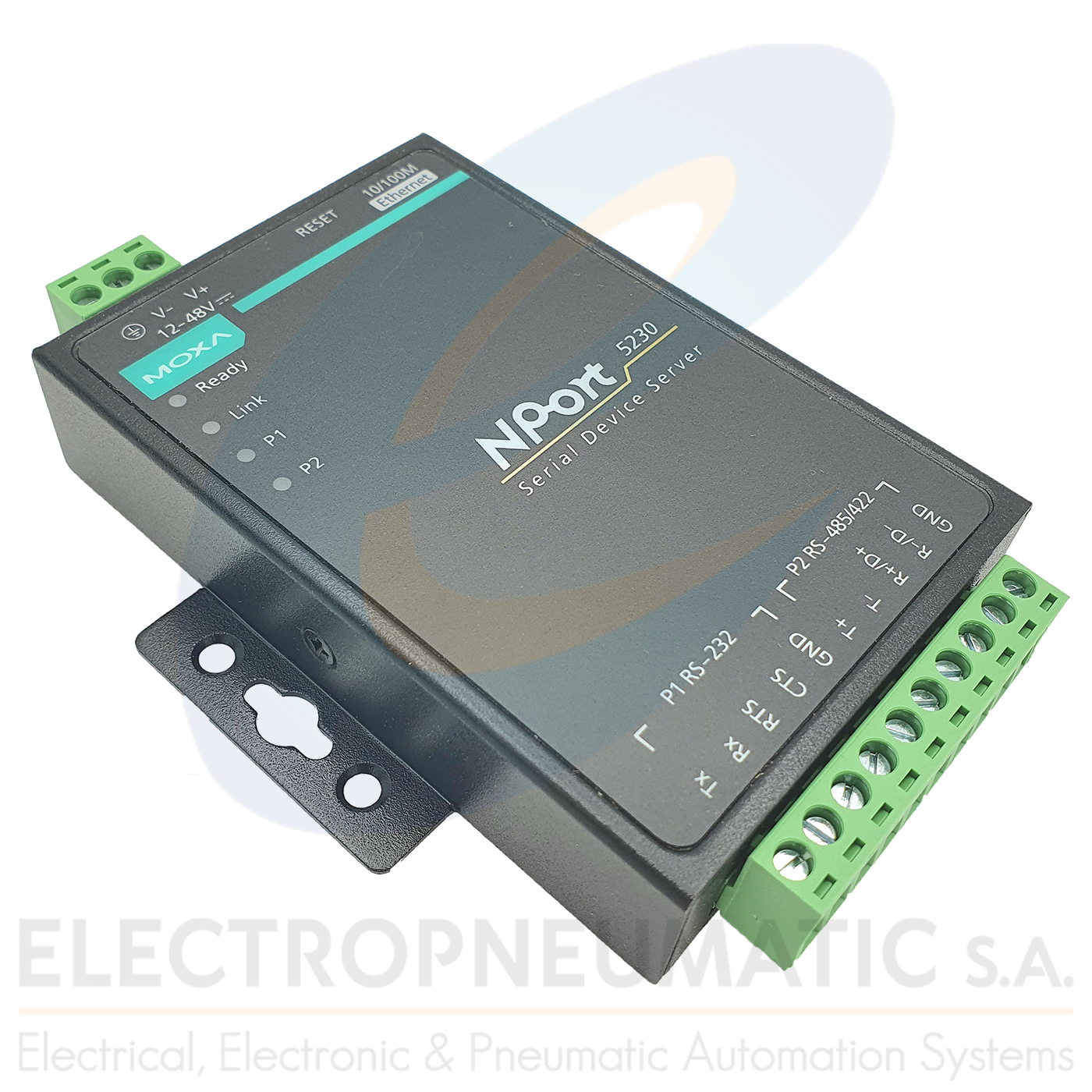
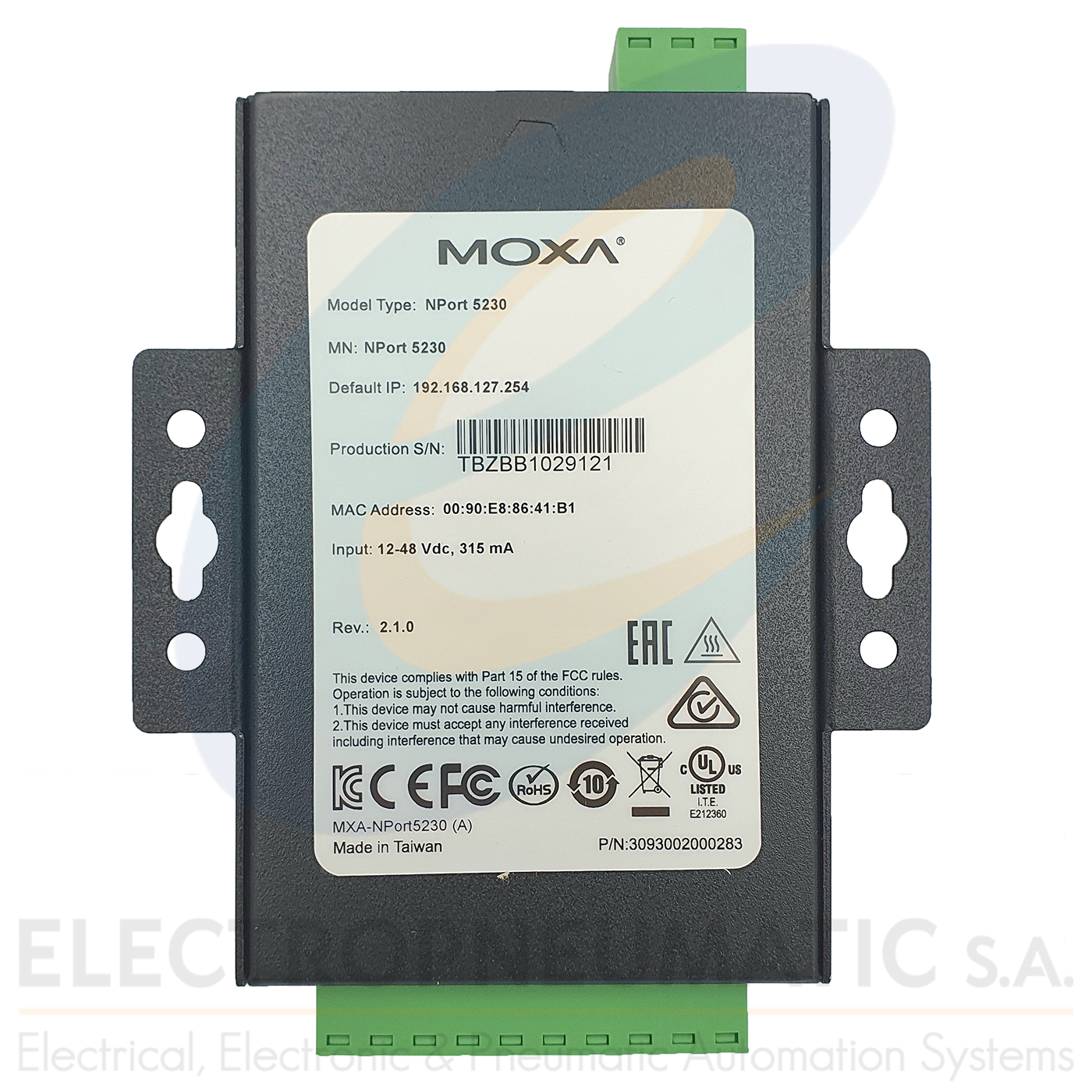
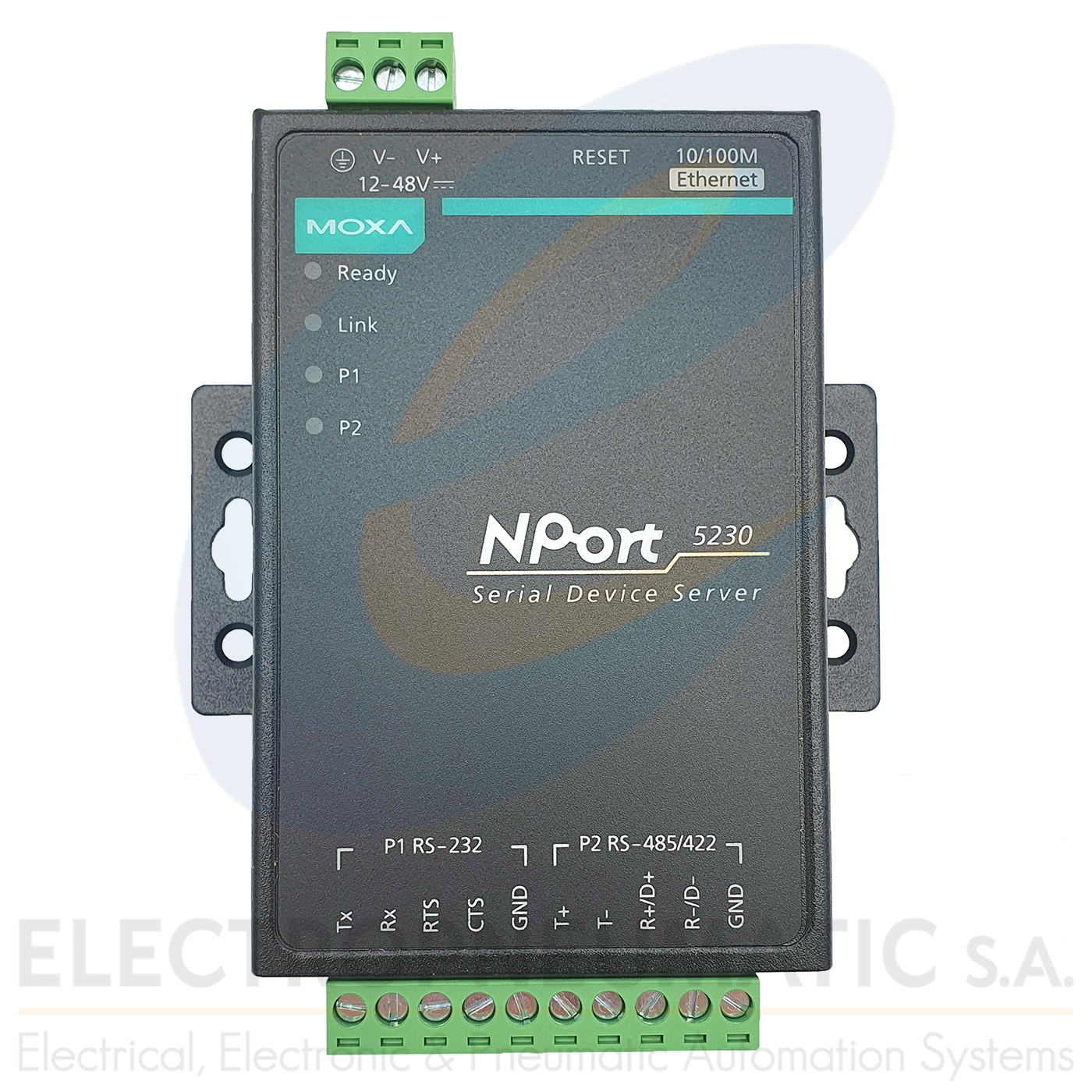
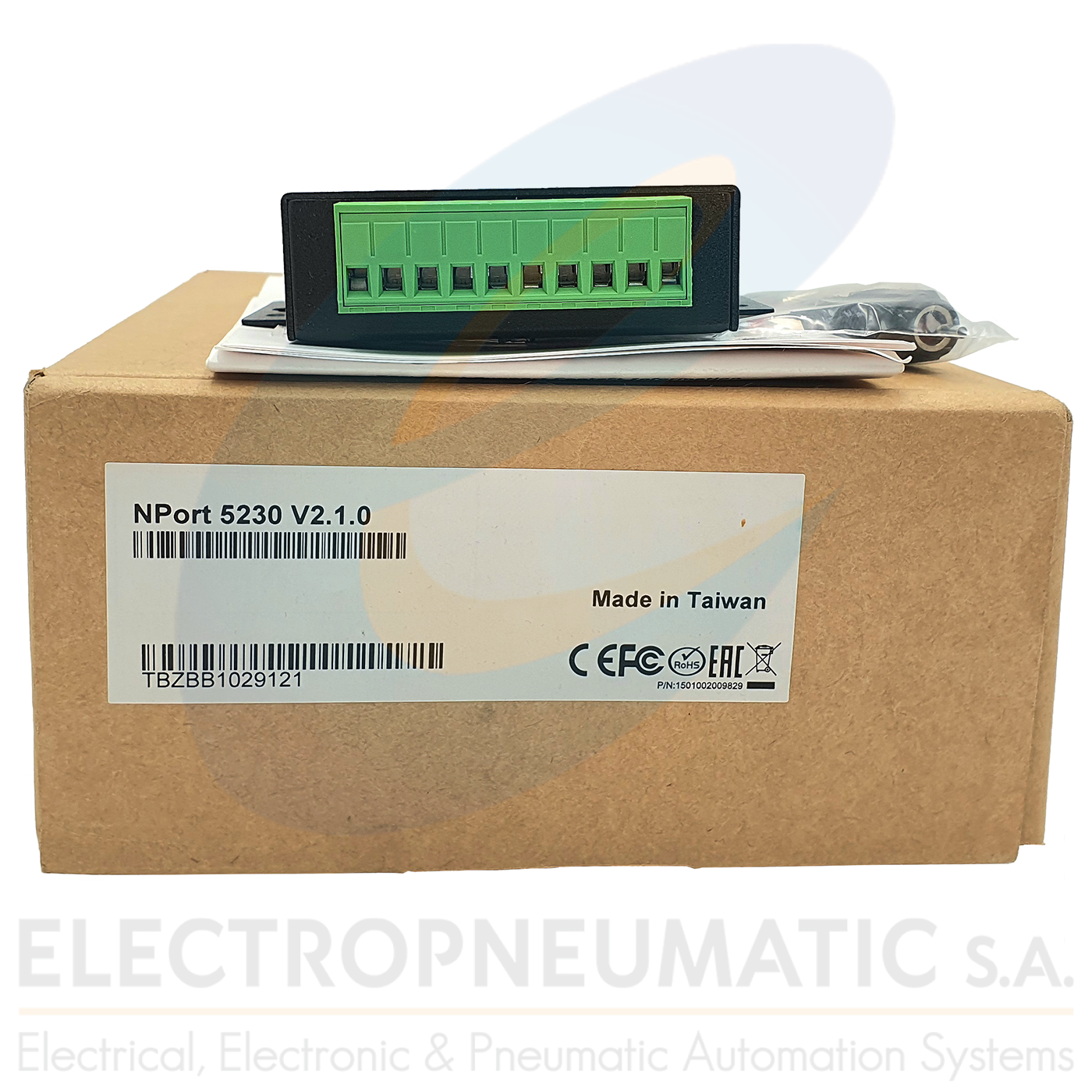
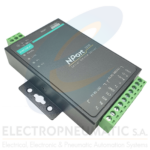
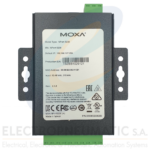
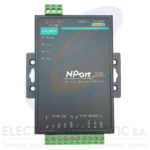
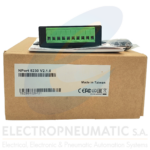
2-PORT SERIAL DEVICE SERVER MOXA NPORT 5230 V2.1.0

- V 2.1.0
In stock

Fast Shipping
Worldwide!

More than 2.000
products available!

Support
from experts!

5-star ratings
from worldwide clients!
ℹ️ Additional Information
| Condition | BRAND NEW |
|---|---|
| Manufacturer | MOXA |
| Product Code | 200.203.02822 |
📦 Guarantee Terms
🗂️ Product Files
🖹 Description
- Compact design for easy installation
- Socket modes: TCP server, TCP client, UDP
- Easy-to-use Windows utility for configuring multiple device servers
- Patented ADDC® (Automatic Data Direction Control) for 2-wire and 4-wire RS-485
- SNMP MIB-II for network management
The NPort® 5200 serial device servers are designed to make your industrial serial devices Internet-ready in no time. The compact size of NPort 5200 serial device servers makes them the ideal choice for connecting your RS-232 (NPort 5210/5230/5210-T/5230-T) or RS-422/485 (NPort 5230/5232/5232I/5230-T/5232-T/5232I-T) serial devices—such as PLCs, meters, and sensors—to an IP-based Ethernet LAN, making it possible for your software to access serial devices from anywhere over a local LAN or the Internet. The NPort 5200 Series has a number of useful features, including standard TCP/IP protocols and choice of operation modes, Real COM/TTY drivers for existing software, and remote control of serial devices with TCP/IP or traditional COM/TTY Port.
Serial-to-Network Converter – Moxa NPort 5230
This is a serial-to-network converter, specifically the NPort 5230 from Moxa.
What it is
A 2-port serial device server that allows legacy serial devices to be connected to modern Ethernet networks.
It acts as a bridge between traditional serial communication and TCP/IP-based networking.
Ideal for upgrading existing systems without replacing equipment.
What it does
- Converts:
o RS-232 / RS-422 / RS-485 → Ethernet (TCP/IP) - Enables devices such as:
o PLCs
o Sensors
o Energy meters
o CNC machines
o Industrial controllers
To communicate over a LAN or even the internet.
Key features
- 2 independent serial ports
• Ethernet interface (RJ45)
• Industrial screw terminals for secure wiring
• Wide protocol support:
o TCP/IP
o UDP
o Modbus TCP (via protocol conversion)
• Compact and rugged industrial design
How it works (simple)
- Connect the serial device to the NPort
- The NPort converts serial data into network packets
- Data is transmitted over Ethernet
- A PC, PLC, or SCADA system reads the data remotely
Enables seamless communication between old and new systems.
Where it’s used
- Industrial automation systems
• SCADA and monitoring platforms
• Remote equipment access
• Factory and process control
• Integration of legacy equipment into modern networks
Advantages
- Extends the life of serial devices
• Enables remote access and monitoring
• Reduces need for serial cabling over long distances
• Easy configuration and deployment
• Reliable industrial communication
Important note
- Requires proper network configuration (IP settings)
• Must match serial communication parameters (baud rate, parity, etc.)
• Often used with virtual COM port software or TCP sockets
Example use case
- Old PLC with RS-485 interface
• Connect it to the NPort
• Access it from a PC or SCADA system via Ethernet
Simple explanation
It’s a “translator box” that allows old serial devices to communicate over modern Ethernet networks, making them accessible remotely without replacing existing equipment.